
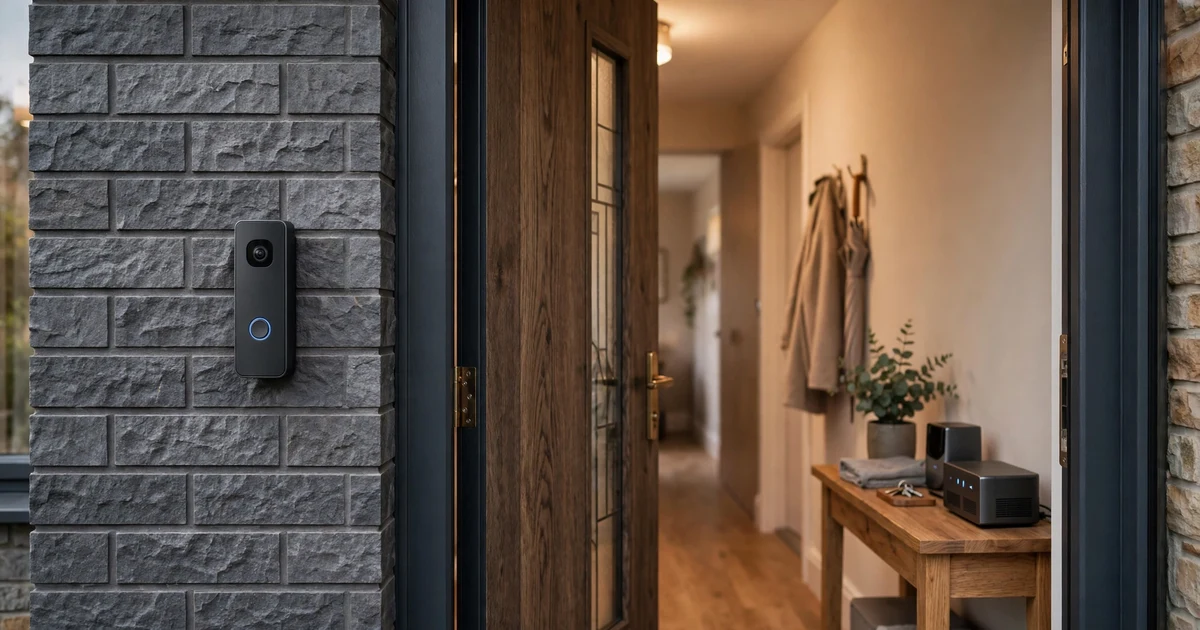
The best video doorbells with no subscription in the UK store video locally, usually on a hub inside your home or on memory built into the doorbell itself. That means you pay once for the hardware and never pay a monthly fee. Eufy leads this space, with local storage built in as standard, while brands like Ring and Google only keep video history if you pay for a plan.
Why subscriptions sting: the 3-year maths
A video doorbell looks cheap until you add the subscription. Ring’s basic recording plan costs a few pounds a month. Over three years that adds roughly £150 to £200 to the real price of the doorbell, on top of what you paid for the hardware. Google’s plans cost even more.
This is the maths most product roundups skip. Two doorbells that look £40 apart on the shelf can end up hundreds of pounds apart after three years, depending on whether they force you into a plan. When you compare, always add three years of subscription to the shelf price. That is the real price.
Subscription fatigue is the reason no-subscription doorbells exist. You already pay monthly for broadband, streaming and cloud storage. A doorbell that demands another monthly payment just to show you yesterday’s clips is a hard sell.
Local storage vs cloud: how each works
Local storage means clips stay in your home. The doorbell records to a hub plugged into your router, or to memory inside the doorbell or chime unit. You watch clips through the app, and nothing leaves your house unless you choose to share it. No monthly fee, because there is no cloud service to pay for.
Cloud storage means clips upload to the maker’s servers. This is convenient if your doorbell is stolen, because the footage is safe online. But the maker charges rent for that storage, month after month. Stop paying and most brands stop keeping your clips. Live view usually still works, but video history disappears.
There is a middle ground. Some doorbells offer a free tier of cloud storage, such as a few hours of rolling history or a handful of saved clips. Read the small print before you buy. Free tiers shrink over time, and the features you actually want often sit behind the paywall.
The key terms to know: local storage (video kept on a device in your home), PIR motion detection (PIR stands for passive infrared; it senses body heat, so the doorbell records when a person approaches instead of every passing car), and two-way audio (you can speak to the visitor through the doorbell’s speaker).
Battery vs wired: what suits a UK front door
Battery doorbells suit most UK homes. Many houses have no existing doorbell wiring, and flats almost never do. A battery model sticks to the door frame and runs for weeks or months per charge. You lose nothing by choosing battery except the small chore of recharging.
Wired doorbells run off your existing doorbell transformer or mains power. They never need charging and can record continuously, which battery models rarely do. But they need wiring, which means an electrician if your home has no doorbell circuit. For most buyers, the honest answer is that battery is simpler and good enough.
If you rent, battery is the only sensible choice. It comes off cleanly when you move, and you can take it to your next home. If you own a house with existing wiring, a wired model is worth considering for the set-and-forget convenience.
Best no-subscription picks for UK homes
Eufy is the name to know. Its video doorbells pair with a HomeBase hub that stores clips locally, and the core features work with no subscription at all. You get video history, motion alerts and two-way audio without paying monthly. The kits cost more up front, typically in the £150 to £250 range, but the 3-year maths usually wins.
If you already own a Ring doorbell, know what you are paying for. Ring devices work without a plan for live view and basic alerts, but video history needs a subscription. Before you switch brands, add up what you have paid so far. Many owners find they have spent more on the plan than on the doorbell.
A third route is a doorbell with a free basic cloud tier. Some lesser-known brands include a small amount of free rolling storage, enough for same-day checks. This suits anyone who only wants to see who is at the door right now, not build an archive.
Whichever you choose, check three things before buying: that local storage works with no account tricks, that the app does not hide core features behind a trial that expires, and that replacement parts like batteries and mounts are sold in the UK.
Night vision and UK winter
A doorbell earns its keep in winter, when it is dark by 4 pm. All decent models have infrared night vision, which gives clear black-and-white footage after dark. Colour night vision exists on some models and looks impressive, but it needs some ambient light from a porch lamp to work well.
Cold affects batteries. Lithium batteries lose capacity in freezing weather, so a doorbell that lasts three months in summer might last two in January. This is normal, not a fault. If you want more on keeping gadgets healthy in the cold, see our guide to gadget battery safety.
Keep the indoor hub somewhere warm and dry, not in an unheated porch or garage. Extreme cold can also make PIR motion detection slightly less sensitive, so test your motion zones on a cold evening and widen them if the doorbell misses visitors.
Installation without drilling
Most renters and many owners want no drilling. Adhesive mounts hold a battery doorbell firmly to a door frame or wall, and no-drill brackets hook over the top of the door or fit the existing peephole. Both come off cleanly when you move.
If you rent, check your tenancy agreement before you mount anything, and remember that filming a shared hallway or the street brings UK data protection rules into play. Keep the camera angled at your own doorway and tell your landlord what you have fitted. A quick message now avoids an argument later.
Wired installation is a different job. Unless you are confident with household electrics, get an electrician. A wired doorbell on the wrong transformer can buzz, overheat or simply not work.
What you give up without a plan
No-subscription doorbells are not missing anything essential, but be honest about the trade-offs. Cloud plans usually offer longer video history, smarter alerts that tell a person apart from a parcel, and sometimes a theft replacement promise. Local storage keeps weeks or months of clips, which is plenty for most homes, but it is finite.
The biggest real loss is off-site backup. If someone steals a doorbell with built-in memory, the footage goes with it. A hub hidden inside the house solves this neatly, which is why hub-based systems are the sweet spot for no-subscription buyers.
Ask yourself what you actually need. If the answer is “see who is at the door and check yesterday’s visitors”, local storage does the job with nothing to pay monthly. If you want months of searchable history and package detection, a plan may be worth it. Most households land firmly in the first camp.
Frequently asked questions
Will a video doorbell work in a flat?
Yes, as long as you have WiFi at the front door and permission from your landlord or building manager. Battery models are ideal because they need no wiring. Angle the camera at your own doorway, not the shared hallway, and check your building’s rules on cameras first.
Does the cold kill the battery?
Cold shortens battery life but does not kill a healthy battery. Expect noticeably shorter runtimes in January and February, and bring the doorbell indoors to charge it. Charging a freezing-cold lithium battery is worse for it than the cold itself, so let it warm up first.
Can I view footage when I am abroad?
Yes. Local storage only means the clips are stored in your home, not that you must be home to watch them. The app streams clips from your hub over the internet, so you can check in from anywhere with a data connection.
Do I need broadband for it to work?
You need WiFi for alerts, live view and remote access. Without WiFi most doorbells still chime like a normal doorbell, but the smart features stop. A weak signal at the front door is the most common cause of missed alerts, so test your WiFi strength there before you buy.
The bottom line
The best no-subscription video doorbell for most UK homes is one with local storage on a hub, bought once and paid for once. Add three years of subscription fees to every rival’s shelf price before you compare, and the no-subscription pick usually wins on cost as well as principle. For more smart home buying advice, see our robot vacuum cleaners buying guide for the UK.