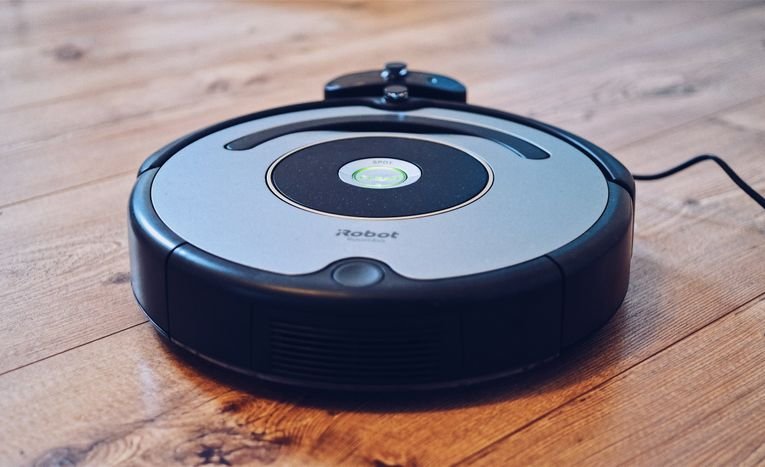
A robot vacuum cleaner is a compact, disc shaped or D shaped device that navigates a home on its own, using sensors, cameras, or laser mapping to vacuum floors and return to a charging dock without any manual pushing. Most models clean on a scheduled routine set through a smartphone app, avoid obstacles such as furniture legs and pet bowls, and empty their own dustbin into a larger base station in the case of premium self emptying models. For a typical UK home, a robot vacuum handles day to day floor cleaning, while a traditional upright or stick vacuum remains useful for deep cleaning and stairs.
Robot vacuums have gone from a niche gadget to one of the most common smart home purchases in the UK, driven largely by improvements in navigation and the arrival of combined vacuum and mop models. This guide covers how robot vacuums navigate a home, what separates budget models from premium ones, key buying considerations for UK homes with carpets, pets, and stairs, and how to get the most out of one once it is installed.
How Robot Vacuums Navigate a Home
Early robot vacuums, and many budget models today, use random or bounce navigation, changing direction whenever they hit an obstacle. This works reasonably well in small, simple rooms but tends to leave gaps and takes far longer to cover a whole floor. Mid range and premium models instead use one of two mapping approaches: LIDAR, which spins a small laser sensor to build a precise map of the home, or vSLAM, which uses a camera and visual landmarks to do the same job at a slightly lower cost. Once mapped, the vacuum can clean room by room, avoid already cleaned areas, and let the owner set no go zones through the app for things like a pet’s water bowl or trailing cables.
Robot Vacuum vs Robot Vacuum and Mop Combo
| Feature | Vacuum Only | Vacuum and Mop Combo |
|---|---|---|
| Best surfaces | Carpet, rugs, and hard floors | Hard floors, tile, and sealed wood |
| Typical UK price | £150 to £500 | £350 to £1,200 |
| Maintenance | Empty bin, clean brush roll | Also refill water tank, clean mop pads |
| Best for | Carpeted UK homes and flats | Open plan kitchen and hard floor homes |
Combo models have improved significantly, with premium versions lifting the mop pad automatically when they detect carpet, but a dedicated vacuum only model generally still gives stronger suction for carpet heavy UK homes at a lower price point.
Key Factors to Consider Before Buying
- Suction power: Measured in pascals (Pa), higher suction matters most for homes with pets or thick carpet, where 2,500Pa or more is generally recommended.
- Battery runtime and self charging: Larger UK homes need a vacuum that can pause, return to recharge, and resume the same cycle automatically.
- Obstacle avoidance: Camera based obstacle detection prevents the vacuum getting tangled in cables or pushing pet mess around, a common complaint with older bump navigation models.
- Self emptying base: A self emptying dock significantly reduces weekly maintenance, though it adds to the upfront cost and takes up more space than a basic charging dock.
- Noise level: Ranges from around 55dB on eco mode to 75dB on max power, worth checking for flats or homes with young children napping during the day.
- App and voice assistant support: Integration with Alexa or Google Assistant allows scheduling and room specific cleaning by voice command.
Robot Vacuums in Homes With Pets and Stairs
Two common UK household features change which model makes sense. In homes with pets, tangle free brush rolls and strong suction are essential to deal with shed fur, and a model with a HEPA filter helps reduce airborne allergens rather than simply redistributing them. Stairs remain the one area no robot vacuum can manage, since none currently climb steps, so most UK homes with multiple floors either buy a vacuum per level or accept that stairs and landings still need a handheld vacuum or brush.
Getting the Best Results From a Robot Vacuum
- Run an initial mapping cycle in daylight with doors open so the vacuum builds an accurate floor plan on the first pass.
- Set a daily or every other day schedule rather than relying on manual starts, since frequent light cleaning outperforms infrequent deep cleaning for dust and pet hair control.
- Clear loose cables, small toys, and low hanging fabric such as tablecloths before each cycle to prevent tangling.
- Empty the dustbin and rinse the filter weekly, more often in homes with pets, since a clogged filter is the leading cause of reduced suction over time.
- Set virtual no go zones around pet feeding areas and delicate rugs with fringing, which are the two most common trouble spots reported by UK users.
Expert Insight
Cleaning professionals who have tested both budget and premium models generally agree that navigation quality, not raw suction, is the single biggest factor separating a good robot vacuum from a frustrating one. A LIDAR mapped vacuum with moderate suction will typically clean a home more thoroughly and predictably than a high suction model relying on random bounce navigation, simply because it does not repeatedly miss or re-clean the same areas.
Frequently Asked Questions
Are robot vacuums good for homes with thick carpet?
Yes, provided the model has sufficient suction, generally 2,500Pa or higher, and a brush roll designed to avoid tangling in longer pile carpet.
Can a robot vacuum replace a full sized vacuum cleaner?
For day to day maintenance, most UK households find a robot vacuum handles the bulk of floor cleaning, though a full sized vacuum is still useful for stairs, upholstery, and occasional deep cleaning.
How loud are robot vacuums?
Most operate between 55 and 75 decibels depending on the cleaning mode, roughly comparable to a normal conversation on eco mode and closer to a hairdryer on maximum suction.
Do robot vacuums work on multiple floors of a house?
A single robot vacuum can store multiple floor maps and be manually carried between levels, but it cannot climb stairs itself, so many multi storey UK homes use one unit per floor.
How often should the filter be replaced?
Most manufacturers recommend replacing the filter every two to three months with regular use, or more frequently in homes with pets or high dust levels.
Final Thoughts
Robot vacuums have matured into a genuinely practical piece of home technology for UK households, particularly once mapping navigation is factored in alongside suction power. the best value tends to come from matching the specification, carpet versus hard floor, pets or no pets, single or multi storey, to the actual home rather than buying the highest specification available. Those comparing different categories of home robotics may also find our guide to robot lawn mowers a useful companion read. For our full coverage of robotics in the UK, see the robotics hub.