Introduction
Yes, renters in the UK can usually install a smart lock, but only with their landlord’s written permission and only if the lock fits without drilling or replacing the existing cylinder. The renter-friendly route is a retrofit smart lock: a device that clamps over the thumbturn on the inside of your door and leaves the original lock, keys and cylinder untouched. This guide explains what your tenancy agreement actually allows, which locks keep your deposit safe, and what to do when you move out.
The short answer
Most tenancy agreements say you must not alter the property without permission, and changing a lock counts as an alteration. That does not mean the answer is no. It means you ask first, in writing, and you choose a lock that reverses cleanly. A retrofit lock that fits over the existing thumbturn is the easiest yes a landlord can give, because nothing about the door changes and the original key keeps working from outside.
What your tenancy agreement actually says
Dig out the clause on alterations, improvements and locks. Most assured shorthold tenancy agreements contain one of these wordings: no alterations without written consent, no changing locks without permission, or a requirement to return all original keys at the end of the tenancy. Consent must not be unreasonably withheld for minor improvements under the Landlord and Tenant Act 1985, but a lock change is a security matter, so landlords take it seriously and you should too.
Three things matter more than the exact wording. First, get permission in writing, by email, before you buy anything. A verbal yes is worth nothing in a deposit dispute. Second, promise in that same email that you will restore the original setup when you leave. Third, keep the original keys and any parts you remove, even if the new lock makes them redundant for a while.
The renter-friendly option: retrofit locks that need no drilling
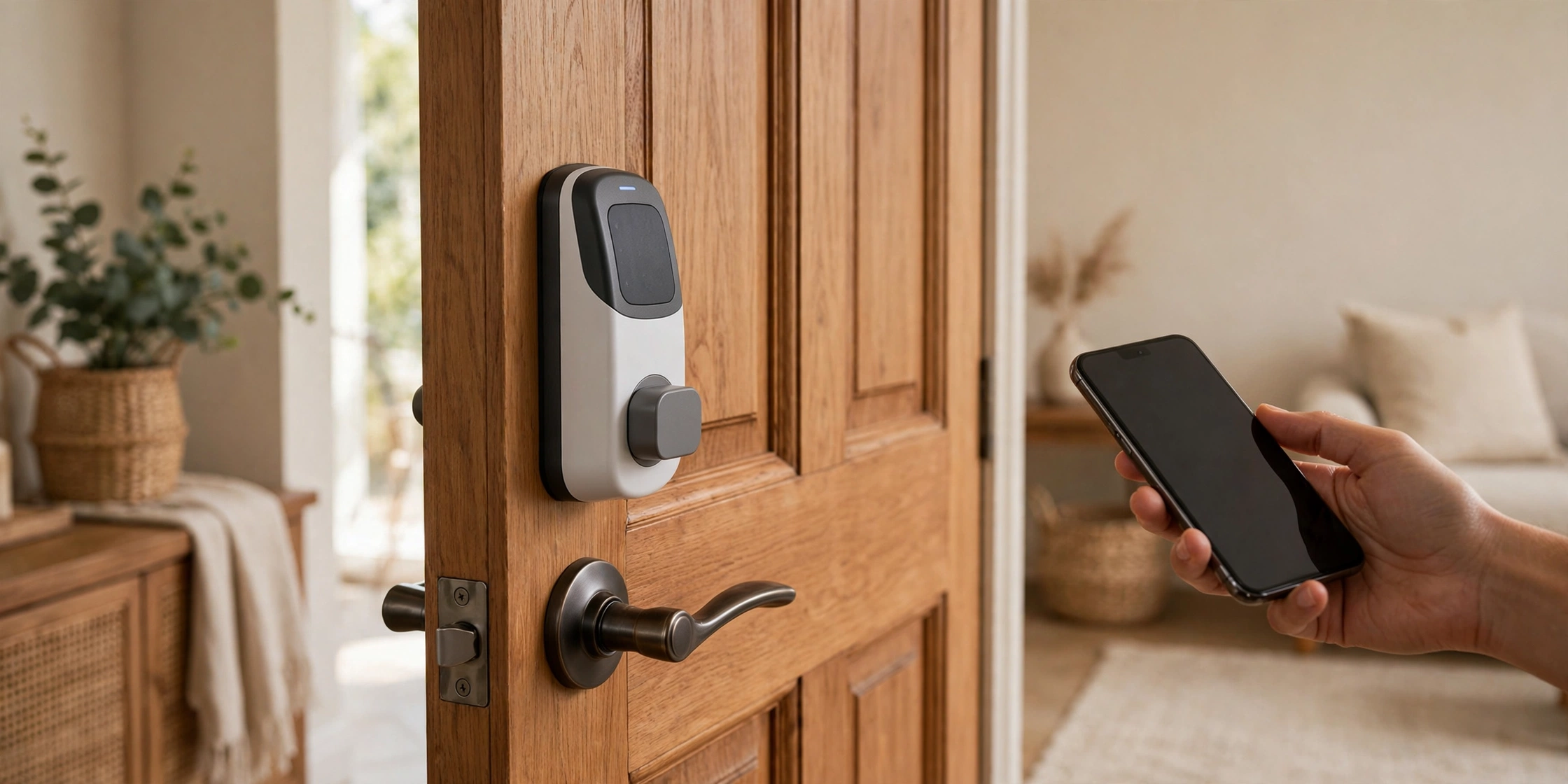
A retrofit smart lock replaces nothing. It mounts on the inside of the door, grips the existing thumbturn, and turns it with a small motor when you tap your phone or enter a code. The outside of the door looks exactly the same, and your existing key still opens the door from outside. Installation takes about 15 minutes with a screwdriver, and removal takes the same.
This is the only type of smart lock most renters should consider. Full replacement smart locks swap out the whole cylinder or handle, and that means drilling, a new key profile and a conversation with your landlord about who holds a spare key. Avoid them unless your landlord explicitly agrees in writing and you accept the cost of restoring the original lock.
Before you buy, check three things about your door. You need a thumbturn on the inside rather than a key operated cylinder on both sides. You need enough clearance around the thumbturn for the lock body, which is roughly the size of a large mug. And you need to know your cylinder type, because most retrofit locks are made for Euro profile cylinders, the oval or round barrel shape found on most modern UK doors.
Front doors, flat doors and fire doors: the rules that matter
Flats add a second layer of rules. If you rent a flat, the front door to your flat may be owned by the freeholder or managed by a building management company, not your landlord. Your landlord’s permission may not be enough on its own, and the building manager may need to agree too. Ask your landlord to confirm whether anyone else must approve.
Fire doors are the hard line. Many flat entrance doors are fire doors, and fire doors must never be drilled, cut or modified in any way that could affect their fire rating. A retrofit lock that clamps over the thumbturn does not modify the door leaf, which is why it is the safe choice here, but check with your landlord or building manager if your door has a fire door certificate or a self-closing mechanism.
Communal entrance doors are a different matter entirely. The main door to the building belongs to the freeholder, and fitting any lock to it is almost never a renter’s decision. If you want keyless access to the building, raise it with your landlord and the managing agent as a building improvement, not a personal project.
How to ask your landlord (and get a yes)
Landlords refuse smart locks for three reasons: security, access in an emergency, and the state of the door when you leave. Answer all three before they ask.
Write a short email that says which lock you plan to fit, that it is a no-drill retrofit over the existing thumbturn, that the original lock and keys stay in place and working, that you will give them a spare access method if they reasonably require one (for example a code or a key safe), and that you will remove it and restore everything before you move out. Offer to send photos of the door and the lock model first. Most reasonable landlords agree to this, because it costs them nothing and improves the property’s appeal to the next tenant.
If your landlord refuses, ask what would change their mind. Sometimes the objection is a specific worry, such as emergency access, and a code they can hold solves it. If the refusal is absolute, accept it: fitting a lock against an explicit refusal risks your deposit and your tenancy.
Installing without losing your deposit
Deposit disputes come down to evidence. Photograph the door, the lock and the frame before you install anything, and keep those photos with your permission email. Follow the manufacturer’s fitting guide exactly, and never force a part that does not fit your cylinder. If the lock needs an adapter plate, use the adhesive or clamp fitting supplied rather than drilling pilot holes.
Tell your home insurer too, or at least check your policy. Most contents policies do not object to a retrofit lock that leaves the original lock working, but some policies require a lock to meet a British Standard such as BS3621. A retrofit lock does not change the cylinder, so the original lock’s standard still applies, but a quick email to your insurer removes any doubt at claim time.
One more practical point: battery powered retrofit locks need their batteries changed every few months, and a flat battery means the motor cannot turn. Keep the physical key as your backup, and never rely on the smart lock alone.
What to do when you move out
Removal is the reverse of installation. Take the lock off, refit anything you removed, and check the door looks exactly as it did in your move-in photos. Hand back every original key, including any you had cut. If your tenancy deposit is protected, and it must be by law, your landlord can only deduct for damage beyond fair wear and tear, and a cleanly removed retrofit lock leaves nothing to deduct.
If you fitted the lock with permission and removed it properly, mention it in your checkout email. A short note saying the lock was removed and the original setup restored closes the matter before a dispute can start.
FAQs
Do I need my landlord’s permission to fit a smart lock?
Yes. Changing or adding to a lock counts as an alteration under almost every tenancy agreement, so get written permission first, even for a no-drill retrofit lock.
Can my landlord refuse a smart lock?
Yes, a landlord can refuse, especially for security or emergency access reasons. A retrofit lock that leaves the original lock untouched is the easiest to get approved, and offering the landlord a spare access method often resolves the objection.
Will a smart lock invalidate my home insurance?
A retrofit lock should not, because it leaves the original lock and cylinder in place. Check your policy or email your insurer to confirm, especially if your policy names a British Standard lock requirement.
Can I fit a smart lock on a flat entrance door that is a fire door?
Only a no-drill retrofit lock that clamps over the existing thumbturn, and only with your landlord’s permission. Never drill or cut a fire door, and confirm with your landlord or building manager first.
What if my door has no thumbturn on the inside?
Retrofit locks need a thumbturn to grip. If your door needs a key on both sides, a retrofit lock will not fit, and you would need a full lock replacement, which most landlords will not approve for a rental.
Conclusion
Renters can install smart locks in the UK, and the route that works is simple: ask in writing, fit a no-drill retrofit lock over your existing thumbturn, and restore everything when you leave. Skip full replacement locks, never touch a fire door with a drill, and keep your permission email and move-in photos safe. Done that way, a smart lock gives you keyless convenience without risking your deposit.
If you are building out the rest of your smart home, start with the standard that ties it together: our guide to what the Matter smart home standard means for UK buyers explains which devices will work together. For the front of the house, our best video doorbells with no subscription covers renter-friendly options that avoid monthly fees. And if you rent, our comparison of smart bulbs vs smart switches covers the wiring and landlord questions that matter in a rented home.