
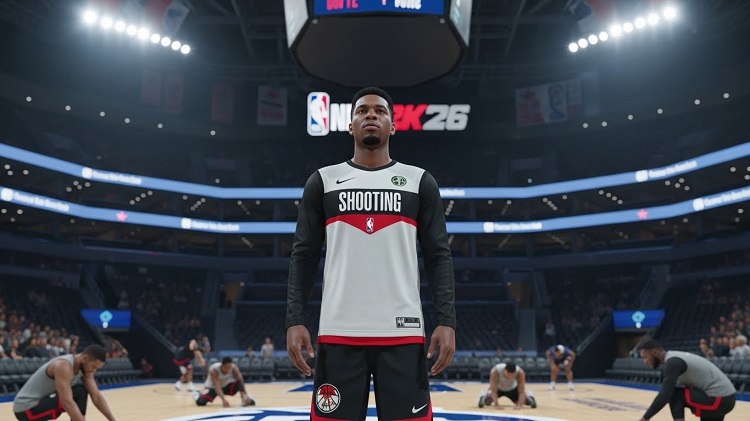
AI is changing video game development at almost every stage, from how characters behave to how quickly studios can build detailed game worlds. Rather than replacing developers, AI tools are increasingly used to speed up repetitive, time consuming tasks, freeing creative teams to focus on design and storytelling. This guide covers the main areas where AI is currently making a genuine difference in how games are made.
Where AI Is Being Used in Game Development
- Procedural content generation: AI tools help generate large, detailed game worlds, terrain, and level layouts far faster than manually designing every element, particularly valuable for open world games.
- Non-player character behaviour: AI driven NPCs can react more dynamically to player actions than traditional scripted behaviour trees, creating more believable game worlds. Experimental projects, such as Ubisoft’s NEO NPC prototype, explore characters that can hold unscripted conversations with players.
- Playtesting and quality assurance: AI agents can play through a game automatically, identifying bugs, exploits, or balance issues faster than exclusively manual testing.
- Art and asset creation: AI tools assist artists in generating textures, concept art variations, and initial asset drafts, speeding up early stage creative iteration.
- Dynamic difficulty and personalisation: Some games use AI to adjust difficulty in real time based on player performance, aiming to keep gameplay appropriately challenging without frustrating players.
- Dialogue and voice: AI voice synthesis is being used for placeholder dialogue during development and, more controversially, for some in game voices, while AI writing tools help draft large volumes of side quest text.
- Localisation: AI translation tools speed up translating games into multiple languages, though human localisers remain essential for humour, tone, and cultural references.
- Animation and motion: Machine learning models can generate realistic character animation from smaller sets of motion capture data, cutting the cost of animating large casts.
AI Across the Development Stages
AI now touches nearly every phase of making a game, as this overview shows.
| Development stage | What AI does | Example |
|---|---|---|
| Pre-production | Generates concept art variations and helps prototype ideas quickly | Artists exploring dozens of visual directions in days instead of weeks |
| Production | Builds terrain, textures, and level layouts; assists with code | Procedural world generation for open world games |
| Audio | Creates placeholder voice lines and adaptive music | Temporary dialogue recorded before final voice sessions |
| Testing | Automated playtesting bots find bugs and balance problems | AI agents playing thousands of matches to check game balance |
| Live operations | Moderates chat, personalises offers, detects cheating | Automatic detection of cheaters in online multiplayer games |
Traditional vs AI Assisted Development
The table below shows how AI is changing, rather than replacing, established development work.
| Task | Traditional approach | AI assisted approach |
|---|---|---|
| World building | Designers hand craft every area | AI generates terrain and layouts that designers then refine |
| NPC behaviour | Scripted behaviour trees with fixed responses | AI driven characters that react more dynamically to players |
| Playtesting | Human testers play through builds manually | AI bots play continuously, with humans focusing on feel and fun |
| Concept art | Artists paint each concept from scratch | AI generates variations; artists select and polish the best |
| Localisation | Translators work through scripts line by line | AI produces first drafts; human localisers refine tone and humour |
Real Examples in Released Games
AI in games is not just a future promise. No Man’s Sky famously uses procedural generation to create its vast universe of planets, an early landmark in algorithmic content creation. Left 4 Dead’s AI Director adjusts enemy spawns and pacing based on how the player is performing, a classic example of dynamic difficulty. Middle-earth: Shadow of Mordor’s Nemesis system gave enemy orcs memories and personalities that evolved across the campaign, showing how smarter NPC behaviour can define a whole game. Microsoft’s Muse project has even demonstrated AI models that can generate consistent gameplay footage, hinting at how prototyping might work in future.
What AI Is Not Replacing
Despite the growing use of AI tools, core creative decisions, narrative design, art direction, and overall game design vision remain firmly human led. AI tools generally handle the more repetitive, technically intensive aspects of production, generating variations, testing edge cases, and speeding up iteration, rather than making the creative judgement calls that define what makes a game genuinely enjoyable and distinctive.
There is also a simple commercial reason. Players can tell when content feels generic, and games live or die on distinctive worlds, characters, and mechanics that no statistical model can invent on its own. The studios seeing the best results treat AI as a power tool for skilled developers, not as a substitute for them.
Concerns Within the Games Industry
- Questions around whether AI generated assets and dialogue draw on copyrighted material without appropriate credit or compensation to original creators.
- Concern among developers, particularly artists and writers, about job displacement as AI tools take on more production tasks.
- Quality concerns where AI generated content is used without sufficient human refinement, sometimes producing generic or inconsistent results.
- Voice actor rights: performers have pushed back against AI voice cloning, and recent union agreements in the games industry now include specific protections around AI generated performances.
- Transparency for players: platforms such as Steam now require developers to disclose when AI generated content is used in a game, and players are increasingly asking what that disclosure covers.
What This Means for Players
For players, the practical effects are mostly positive so far: larger and more detailed worlds, smarter enemies, better personalised difficulty, and potentially lower prices as production becomes more efficient. The risks are subtler. Games could start to feel samey if many studios lean on the same AI tools, and the charm of hand crafted design could be diluted. The best defence is the same as ever: support games whose craft you admire, whatever tools were used to make them.
Frequently Asked Questions
Will AI eventually make human game developers unnecessary?
Current AI tools are generally used to assist and speed up specific tasks rather than replace the creative direction and design judgement that defines a game, which remains human led. Even the most optimistic forecasts describe smaller teams doing more, not teams of zero.
Do AI generated game assets raise copyright concerns?
Yes, this is an active area of debate, particularly around whether AI tools were trained on copyrighted material without permission, and how this affects the resulting generated content. Several lawsuits in creative industries are still working through these questions.
Can AI make games more difficult to develop responsibly?
Studios need to balance the efficiency benefits of AI tools against quality control, ethical sourcing of training data, and the creative judgement that ultimately shapes a good game. Clear internal policies on AI use are becoming standard at larger studios.
Which games already use AI in development?
Procedural generation has been used for years in games like No Man’s Sky and Minecraft, while AI driven playtesting and dynamic difficulty appear across many modern titles. Most studios do not advertise exactly which tools they use, so the full extent is hard to measure.
Will AI make games cheaper to make?
It can reduce costs for specific tasks like generating terrain or running playtests, but overall budgets are still driven by the ambition of the project. Historically, efficiency gains in game development tend to be reinvested into bigger and more detailed games rather than returned as savings.
Do players care if a game used AI?
Opinions are divided. Many players do not mind AI assisted production as long as the game is good, while others feel strongly about supporting human artists and want clear disclosure. This split is one reason transparency rules, like Steam’s AI disclosure requirement, are becoming more common.
For related reading, see our guide to how large language models actually work.