
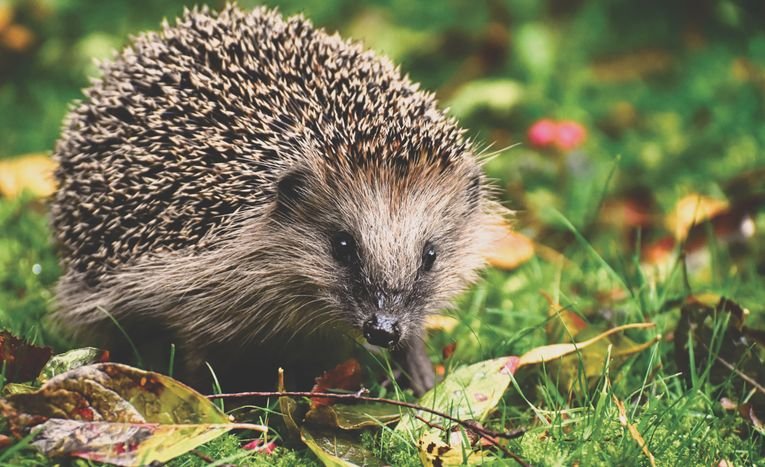
Robot lawn mowers can pose a genuine risk to hedgehogs, which are nocturnal and most active in British gardens overnight, exactly when many older or budget mowers are still scheduled to run. University of Oxford research, carried out with the British Hedgehog Preservation Society, found that certain design features make a significant difference to how much harm a robotic mower can cause on collision, meaning the choice of mower and how it is scheduled both matter for garden wildlife safety, not just lawn quality.
With hedgehog populations already in decline across the UK, robotic mowers have become one of several garden hazards that conservation groups and manufacturers are now working together to address. This guide covers what the research actually found, which design features reduce risk, and the practical steps any robot mower owner can take to keep hedgehogs and other garden wildlife safe.
What the Research Found
Researchers tested a range of robotic mower models against hedgehog specimens to measure how much physical harm each model caused on collision, and found meaningful differences between models rather than uniform risk across the board. None of the models tested could detect a hedgehog before making physical contact with it, which means avoiding collisions in the first place, largely through scheduling and pre-mowing checks, remains more reliable than relying on the mower’s own sensors. The study also specifically flagged that very young, small hedgehogs were the hardest for any model to detect, since their size falls below what most obstacle sensors are tuned to register.
Design Features That Reduce Risk
| Feature | Why It Helps |
|---|---|
| Pivoting blades | Reduces the force and damage caused on contact with an obstacle compared with a rigid, fixed blade |
| Skid plates | Creates a physical barrier that lifts the mower slightly on contact, reducing direct blade contact |
| Front wheel drive | Changes how the mower approaches and rides over an obstacle, generally reducing impact severity |
| Higher, more sensitive obstacle sensors | Improves detection of larger animals, though small juveniles remain difficult to detect regardless |
When comparing models, checking whether a manufacturer specifically references these features, rather than generic “safety sensor” marketing language, is the most reliable way to judge genuine wildlife safety credentials rather than assuming all modern mowers perform equally well.
Practical Steps to Protect Hedgehogs
- Run the mower during daylight hours only. Hedgehogs are overwhelmingly nocturnal, so scheduling mowing sessions for daytime removes the highest risk window almost entirely.
- Check the lawn before each session. A quick visual check for hedgehogs, particularly around long grass, log piles, or garden edges, catches situations the mower’s own sensors would miss.
- Favour shorter, more frequent sessions over long overnight runs. This matches how robot mowers already work best and further reduces the chance of an unsupervised encounter.
- Leave a wild, undisturbed corner of the garden. Keeping one area out of the mower’s boundary gives hedgehogs and other wildlife a safe refuge separate from the cutting zone entirely.
- Check for a hedgehog highway gap in garden boundaries. A small gap in fencing allows hedgehogs to move between gardens without needing to cross an active lawn.
Choosing a Hedgehog-Friendly Mower
When comparing new robot mower models, prioritising pivoting blades, skid plates, and front wheel drive alongside the usual buying factors, covered in our full robot lawn mower buying guide, gives a meaningfully safer choice without requiring any compromise on mowing performance. Several manufacturers have begun referencing hedgehog safety research directly in their product information, which is a reasonable signal that wildlife safety was genuinely considered in the design process rather than an afterthought.
Expert Insight
Conservation researchers involved in this area of study have been clear that avoiding collisions altogether, through daylight-only scheduling and pre-mowing checks, remains more effective than relying on any current mower’s built-in detection technology, since no tested model could reliably detect a hedgehog before contact. The practical message for owners is that responsible scheduling matters at least as much as the specific model chosen.
Frequently Asked Questions
Do all robot lawn mowers pose the same risk to hedgehogs?
No, research has found meaningful differences between models, with features such as pivoting blades, skid plates, and front wheel drive reducing the severity of harm on collision.
Can a robot mower’s sensors reliably detect a hedgehog?
Current research found that no tested models could detect a hedgehog before making physical contact, particularly for smaller juveniles, which is why scheduling and manual checks remain important safety measures.
What time of day is safest to run a robot mower?
Daylight hours, since hedgehogs are predominantly nocturnal and far less likely to be active in a garden during the day.
Are manufacturers responding to hedgehog safety concerns?
Some manufacturers have begun referencing relevant safety research and design features in their product marketing, reflecting growing awareness of the issue across the industry.
Does daylight-only mowing affect how well a robot mower keeps the lawn maintained?
Not significantly, since robot mowers are designed for frequent, short sessions rather than long overnight runs, so shifting the same schedule into daylight hours has minimal impact on lawn quality.
Final Thoughts
Robot mower wildlife safety is a genuine consideration backed by real research, not a marginal concern, and the good news is that the practical fixes, daylight scheduling, a quick pre-mowing check, and choosing a model with the right design features, are straightforward to put in place without sacrificing what makes robot mowers convenient in the first place. For the full picture on choosing and running a robot mower, see our guide to robot mower theft and insurance, another important ownership consideration alongside wildlife safety.